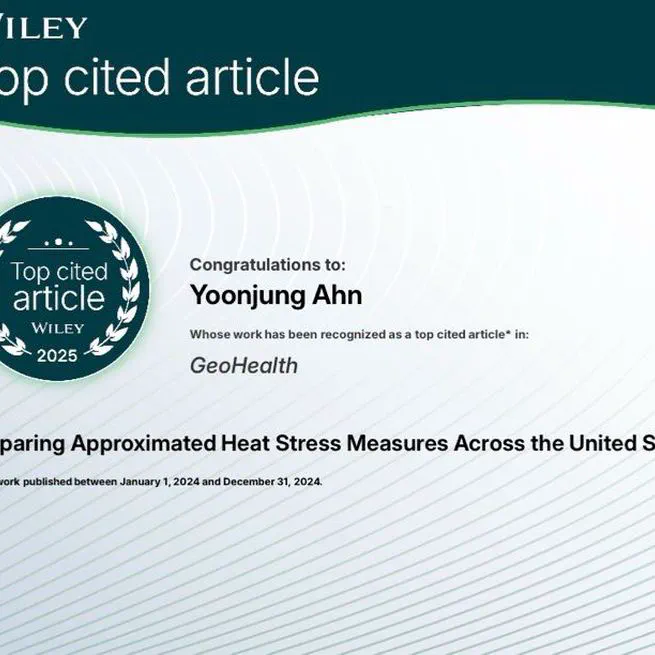
🏆 Top Cited Article in GeoHealth
Our paper “Comparing Approximated Heat Stress Measures Across the United States” has been recognized by Wiley as a Top Cited Article in GeoHealth.
Oct 20, 2026
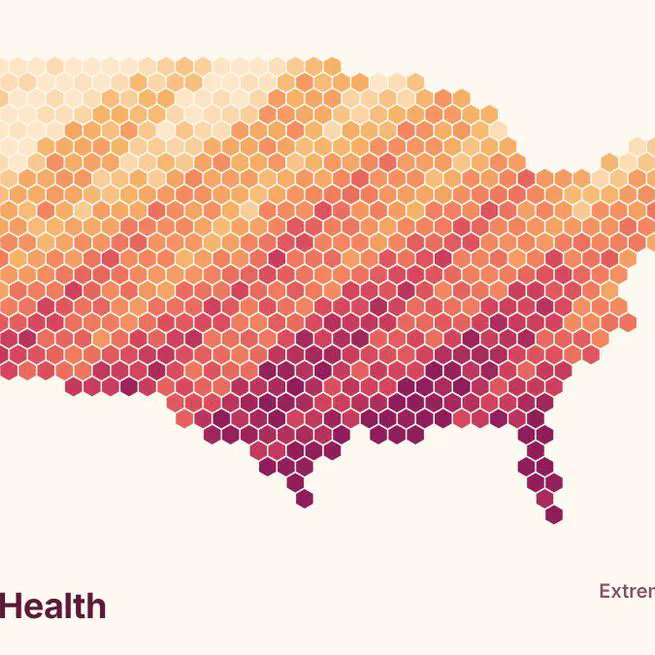
Climate and Health
Research on how climate change and extreme weather affect health, with a focus on maternal health.
Oct 16, 2026
The association of extreme heat and PM2.5 with preterm birth and low birthweight in Florida, United States
Sep 16, 2026
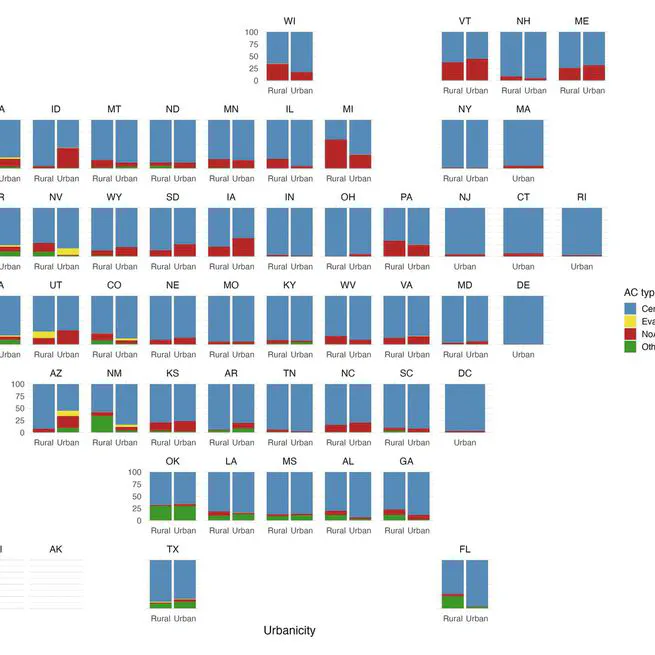
A Comprehensive Dataset of Residential Air Conditioning Prevalence in the Continental United States
A national, property-based dataset of residential air conditioning prevalence by AC type at census tract and ZIP code levels.
Oct 1, 2025
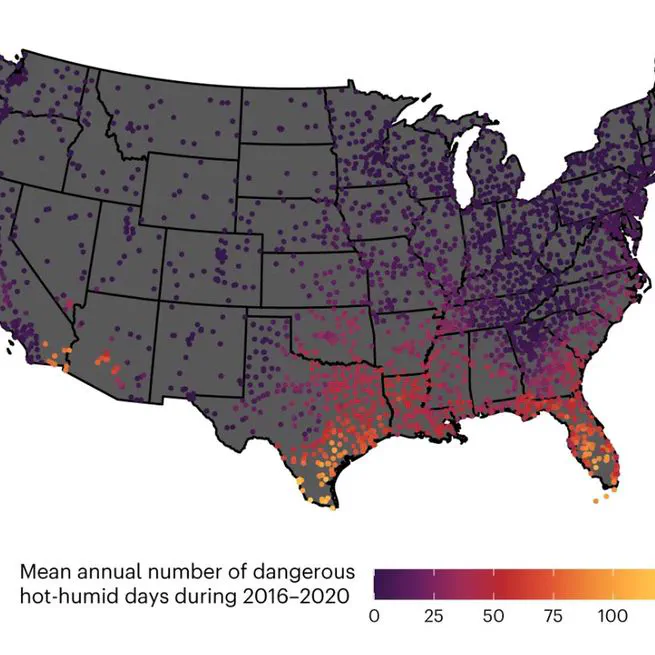
Hazardous heat exposure among incarcerated people in the United States
Exposure to hazardous heat at more than 4,000 U.S. carceral facilities, 1982–2020; state-run facilities in Texas and Florida account for 52% of total exposure.
Apr 1, 2024
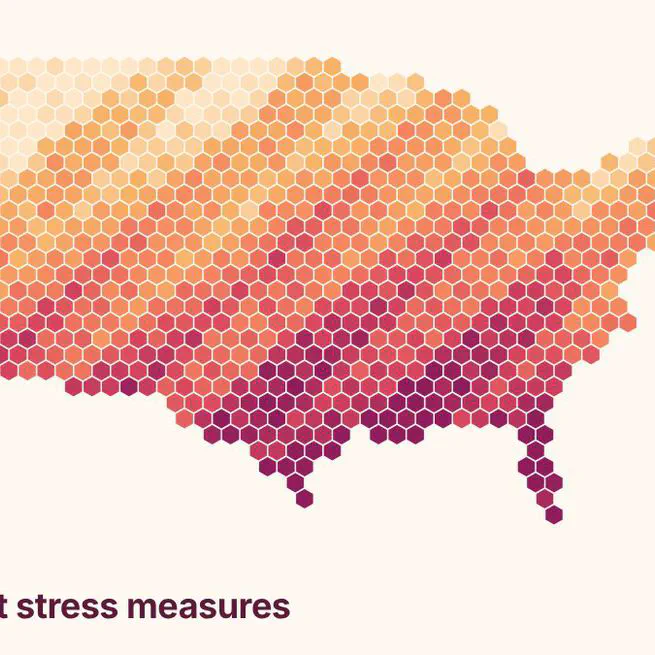
Comparing Approximated Heat Stress Measures Across the United States
Extreme heat threatens human health. Rising intensity and duration of heat days expose more to hot environments. To understand how extreme heat affects human health, it is important to use accurate weather information and measures that reflect people's actual experience of the heat. Heat Index (HI) and Wet Bulb Globe Temperature (WBGT) are commonly used heat stress metrics that are widely used to set exposure guidelines and policies. However, there have been limited comparisons between daily heat measures and weather variables. In this study, we compared three heat measures (HI, WBGTBernard, and WBGTLiljegren) derived from three widely used gridded weather data sets (ERA5‐Land, PRISM, and Daymet) with ground‐based weather observations. The heat measures calculated from both the gridded weather data and the station data showed a reasonably strong agreement. However, the differences varied depending on the climate types. Gridded weather data sets can provide a reliable approach to assessing heat exposure and impacts based on meteorological variables to produce heat measures. However, further research and the establishment of local ground station networks are necessary to reduce measurement errors in exposure and improve accuracy. This will help us better understand the relationship between heat measures and their impact on health outcomes.
Jan 24, 2024